English
Intent
Our English Curriculum at Clapham Manor aims to immerse children in a rich reading and writing environment, igniting a lifelong love of literature and developing the skills to read, write and speak effectively and through meaningful contexts.
The ability to read, write and articulate ideas is the key to accessing many areas of the wider curriculum and the world, and so English skills are embedded in context across the curriculum. We intend for children to leave Clapham Manor able to:
- read fluently and with a good understanding for both pleasure and for information
- have a wide vocabulary
- write clearly, accurately and coherently for different purposes and audiences
- to speak and communicate confidently so they can articulate ideas, develop their understanding and engage with others – skills that will equip them for a successful future where their voice is heard and valued.
Through a carefully mapped progression, and alongside the teaching of phonics, we aim to develop children’s skills in reading, writing, spelling and oracy from the beginning of their journey in the Early Years. We provide children with regular opportunities to revisit their learning, apply it in context and celebrate literacy across the curriculum as they move through KS1 and KS2.
Implementation
We follow Unity Schools Partnership’s CUSP curriculum for English including our reading, writing and spelling curriculums. Early reading is taught following the Read Write Inc. Phonics programme – please see the ‘Phonics’ curriculum area for additional information. In addition to this, we use Accelerated Reader to support children’s progress in reading and are developing our oracy curriculum through our Voice 21 Oracy Schools membership.
Reading
The CUSP reading curriculum is built on three core pillars of:
-
vocabulary
-
reading fluency
-
reading comprehension
Each lesson has a focus on a key skill including retrieval, inference, prediction, personal response and the ability to summarise, compare, predict and recognise authorial intent. These skills are mapped progressively and systematically so that by the end of KS2 children are able to read for purpose and for pleasure, and answer questions using evidence from a text to explain their answers.
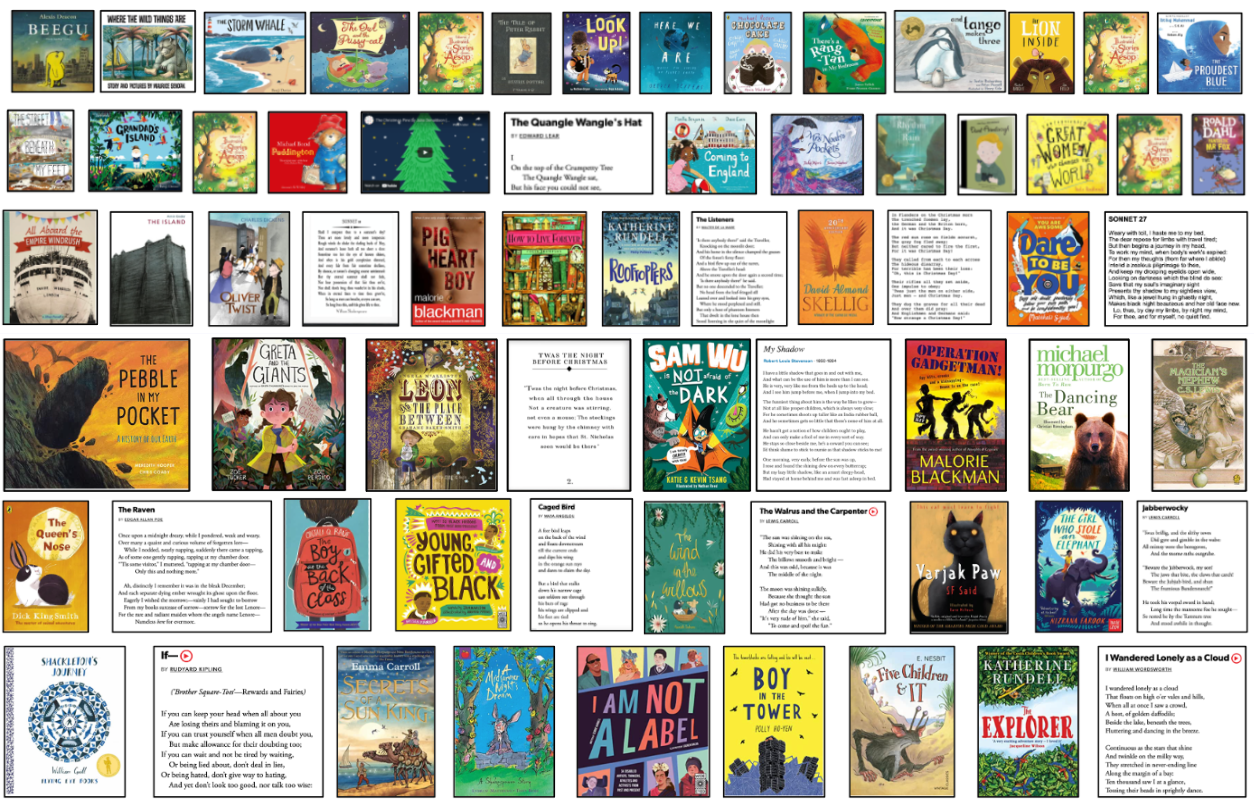
Our reading curriculum is built around a carefully chosen selection of high quality and engaging texts and extracts, including poetry. This fantastic literature has been selected to reflect our school values and diverse community and to develop children’s love of reading, introducing them to famous authors and stories as well as newer books and storytellers.
Children are able to access a range of books from their class book corners and the well-stocked school library. From Year 2 upwards, the use of Accelerated Reader supports children in choosing books to read at home and school that will challenge them at the correct level, by providing a ZPD (zone of proximal development) range for them to choose books from as well as comprehension quizzes for each book they read. Alongside this, a love of reading for pleasure is fostered through wider school reading events, including author visits, trips, book sales and reading celebrations like World Book Day.
Writing
Our writing curriculum provides children with the skills and opportunities to write in a range of styles for different purposes including stories, recounts, instructions, reports and poetry. We have adapted our curriculum so that many writing opportunities link to the texts children are familiar with from reading lessons.
Each writing block has clear goals and an 'ingredients for success' checklist. This ensures the key skills children need to write successfully, including grammar, vocabulary, punctuation and sentence structure are explained clearly and are regularly revisited.
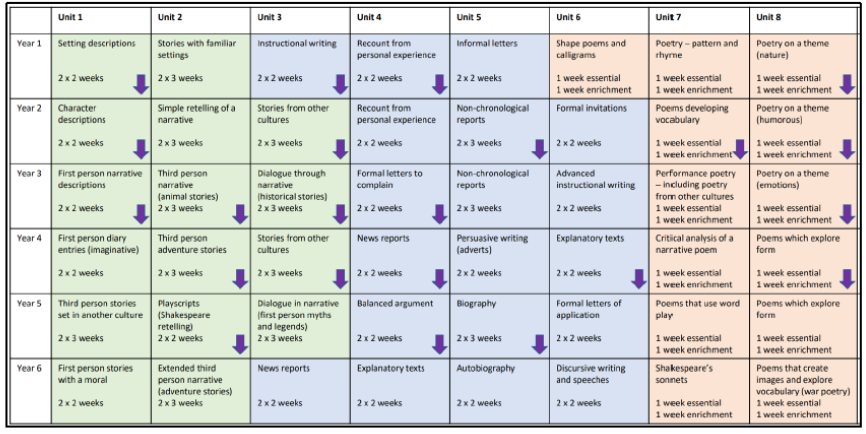
The non-sequenced overview of the CUSP writing curriculum below demonstrates where narrative, non-narrative and poetry blocks are built upon during KS1 and KS2.
Spelling
To ensure thorough coverage of the National Curriculum expectations for spelling, we follow the CUSP Spelling Curriculum, which has been purposefully built around the principles of evidence-led practice. This is to ensure that pupils acquire deep knowledge about the English spelling system and that this learning endures. The curriculum is written cumulatively to allow teachers to move backwards and forwards depending on the starting points for their pupils. Children learn spellings in explicit spelling lessons delivered in 2-week blocks. Spelling is also part of our weekly home learning so spellings can be practised at home and school.
As well as applying the spelling rules children learn in phonics, spelling lessons also include teaching of morphology, studying word parts; their meanings and how this affects spelling and etymology exploring the origin of the words that they are learning about.
Handwriting
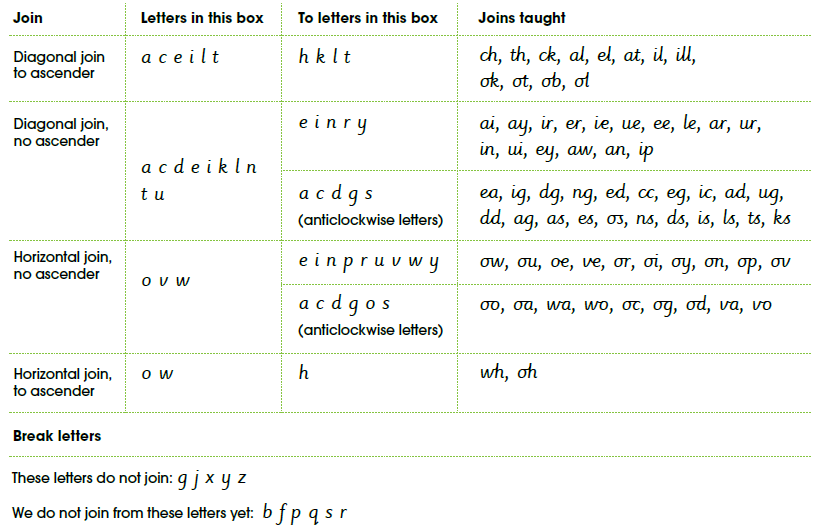
We teach Handwriting following Cambridge University Press’ ‘Penpals for Handwriting’ which develops children’s handwriting gradually through a series of clearly defined stages, each building on the skills developed in the previous one. It aligns with how children learn letter formation during Read Write Inc. Phonics sessions.
Our handwriting lessons build on skills from early mark making and correct letter formation to joining their handwriting and writing with greater speed and fluency while developing their own personal style.
Oracy
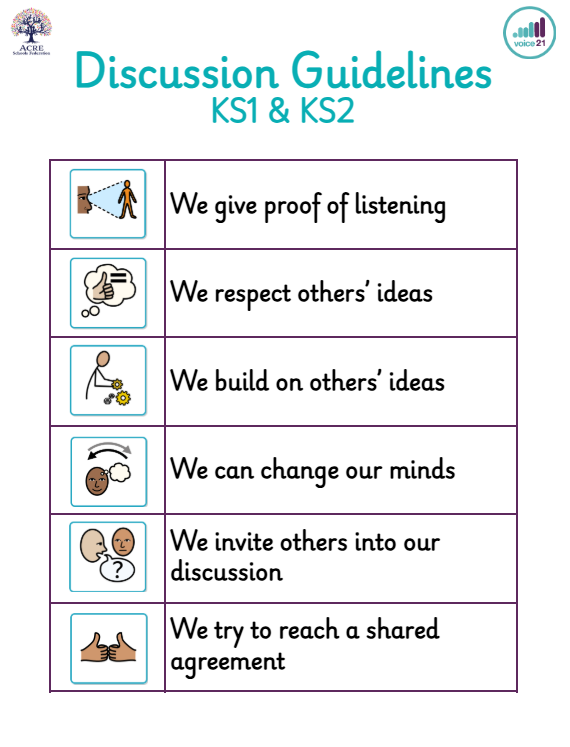
Oracy is a key part of English which is woven through the entire curriculum. Opportunities for discussion-based activities and presenting to groups or even larger audiences are identified across all subjects. We have developed discussion guidelines and strategies using Voice 21’s approach to oracy education.